
Ingredients · Questions & answers · 4 MIN READ
Hot honey: your questions, answered
What to drizzle it on, how to adjust the heat, and what not to assume about homemade storage.
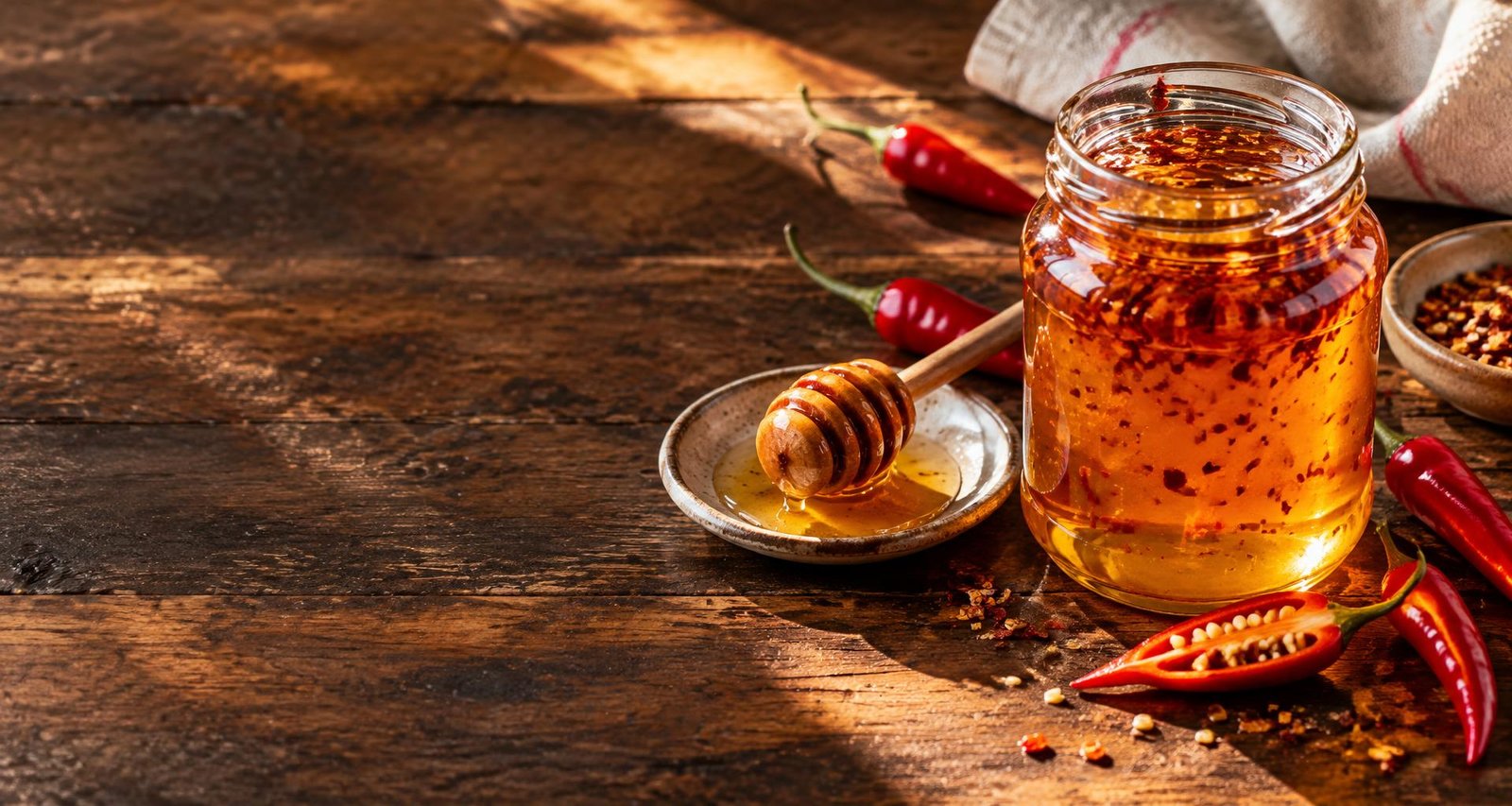
A drizzle, not a rulebook
Hot honey combines sweetness and chili heat. The balance depends on the honey, chili variety, amount, and steeping time. Our Mild-to-Extra-Kick labels describe a relative flavor preference, not a measured Scoville rating.
The flavor questions
What should I put hot honey on?
Try a small amount on cooked wings, roasted vegetables, pizza, or salmon. Start lightly so the sweetness supports the dish rather than covering its other flavors.
Can I make it less hot?
Begin with less dried chili and taste with a clean spoon. Straining removes flakes but will not remove heat already infused into the honey. Diluting a serving portion with plain honey can soften the perceived heat.
Can I add lime or soy sauce?
Yes, to a separate serving glaze for the meal. Those additions change the mixture, so do not use the original honey jar as a mixing bowl or assume its storage properties stay the same.
Why add honey after cooking wings?
A sugary glaze can scorch during prolonged high-heat cooking. Glazing at the end also reduces the time moisture sits on crisp skin.
The safety questions
Does plain honey’s shelf life apply to homemade hot honey?
Not automatically. New ingredients and handling change the product. We do not provide a validated shelf life for homemade infusions. Commercial products should be stored according to their label.
Can babies have hot honey?
No. CDC advises that children younger than 12 months should not be given honey because of the risk of infant botulism.
Does the prep timer tell me food is safe?
No. It helps you remember a task or check. Use a food thermometer and official temperature guidance for meat, poultry, fish, and reheated leftovers.
Sources & editorial notes
Safety guidance is attributed to the sources above. Flavor and technique suggestions are general editorial guidance, not claims of hands-on testing or professional review. No author credentials or personal testing history are claimed.
Read our editorial approach →